
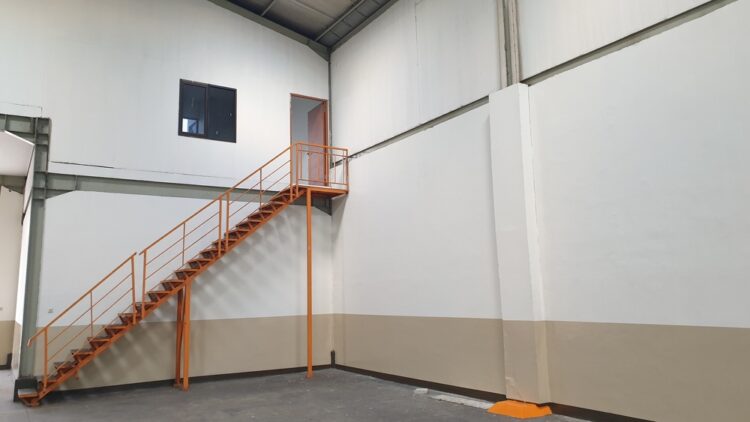
Many business owners look to expand their usable space without the massive expense of a full building addition. A mezzanine floor often provides the perfect solution for expanding warehouses, corporate offices, and various industrial facilities. You might wonder, can a mezzanine be enclosed to create private offices or secure storage for your business?
The short answer is yes, but local regulations strictly govern how you build and enclose these structures. Building officials typically view these raised floor levels as part of the main room below. If you put up walls, you risk converting that enclosed space into an actual additional floor, triggering completely different fire safety requirements.
At Storage & Ergonomic Equipment, we assist companies in understanding these nuances so they can grow within their current footprint. A standard building code requires most mezzanines to remain as an open space and unobstructed to the room they occupy. This openness allows fire detection systems to work properly and helps occupants hear alarms. However, several important exceptions exist that allow you to build an enclosed mezzanine safely.
Navigating Mezzanine Area Limitation and Aggregate Area
The International Building Code clearly distinguishes between a standard mezzanine and a regular story. To qualify as a mezzanine area, the structure must meet strict area limitation rules based on the room below. Generally, the aggregate area of a mezzanine cannot exceed one-third of the floor area of the room it is located in.
If you exceed this allowable mezzanine area, inspectors classify the structure as a new story. This distinction matters because adding a story impacts the structural requirements and tax valuation of your entire facility. You must calculate the exact square foot measurements of both the main room and the proposed addition, making sure that the clear height above and below the mezzanine structure is at least seven feet.
Key Planning Metrics
- Standard Area Limit: 33.3% of the room’s total square footage.
- Minimum Clearance: 7 feet of headroom above and below the deck.
- Construction Type: Material choice (like steel vs. wood) impacts fire rating requirements.
- Occupancy: The number of people assigned to the space dictates the necessary number of exits.
Legally Enclosing Your Space: Can an Enclosed Mezzanine Be Built?
You can enclose a mezzanine if you meet specific occupant load and safety conditions outlined in the code. The most common exception applies when the enclosed space has a very low occupant load. If the enclosed mezzanine holds 10 or fewer people, building codes often permit the walls.
You must still provide adequate ventilation and lighting for anyone working inside that room. This exception frequently helps managers build elevated, private supervisor offices overlooking a warehouse floor plan. Another major exception involves the number of exits available to the people inside. If the mezzanine has two or more exits with direct access to a safe path, enclosure rules relax. At least one of these exits must lead directly to an approved emergency exit outside the enclosed perimeter. Storage & Ergonomic Equipment is a company that specializes in designing these flow patterns to keep your team safe and your building compliant.
Approved Automatic Sprinkler Systems and Expanded Limits
Installing an automatic sprinkler network changes the mathematical limits of your project. For buildings of type II construction, an approved automatic sprinkler layout can increase your allowable area. Instead of the standard one-third limit, the allowable mezzanine area might expand to one-half of the room’s floor area.
| Feature | Standard Requirement | Sprinkler-Equipped Exception |
| Max Area Ratio | 1/3 of the room below | 1/2 of the room below |
| Enclosure Rules | Must remain 100% open | Permitted with specific exit access |
| Fire Protection | Standard detection | Required under and above deck |
| Usage | Storage or Office | High-density industrial use |
The approved automatic sprinkler system must cover both the main floor and the space beneath the new mezzanine. If you enclose the top, the interior of that new room needs its own sprinkler coverage as well. When you work with Storage & Ergonomic Equipment, we help evaluate how your fire suppression needs to shift to accommodate a new mezzanine in Philadelphia.
Industrial Equipment Platforms and Special Occupancies
In special industrial occupancies, you might need to enclose areas to protect sensitive control equipment. The code recognizes that manufacturing plants often require isolated rooms for specialized machinery. These industrial occupancies must exist primarily to house equipment rather than accommodate regular office workers.
Many people confuse a traditional mezzanine with an equipment platform, but the building code treats them differently. An equipment platform is an unoccupied structure designed exclusively to support mechanical systems. Unlike a standard mezzanine, equipment platforms do not count toward the overall building area. Because nobody “lives” or “works” on them, they have much less restrictive enclosure rules. You can often surround them with protective walls or grating to secure the machinery inside, provided the aggregate floor area of all platforms within a room does not exceed two-thirds of the room’s total area.
Structural Integrity and Load Considerations
Beyond the walls and fire codes, you must also consider the load-bearing capacity of the structure when planning an enclosure. Adding walls, windows, and heavy office furniture increases the dead load on the mezzanine, which may require reinforced steel support columns or thicker floor decking. Storage & Ergonomic Equipment works with engineering teams to confirm that every raised floor can handle the specific weight of your intended use, whether that involves high-density shelving or a full administrative suite. Checking that the foundation of your building can support these concentrated loads is just as important as meeting the aesthetic or spatial goals of the project.
Conclusion
Enclosing a mezzanine is entirely possible if you carefully follow established building regulations. You must balance your desire for private, walled-off rooms with fire safety compliance and exit requirements. By leveraging exceptions for low occupant load or installing an automatic sprinkler system, you can build compliant walls that add massive value to your property.
As a leading company in the industry, Storage & Ergonomic Equipment helps you avoid the heavy costs of expanding your building footprint while getting the private rooms you need. Take the time to submit accurate plans and respect the size limits to provide a smooth inspection process. Reach out to us today to start planning your elevated workspace.